
Bitcoin’s path to the mainstream runs through energy. Brazil is the proof.
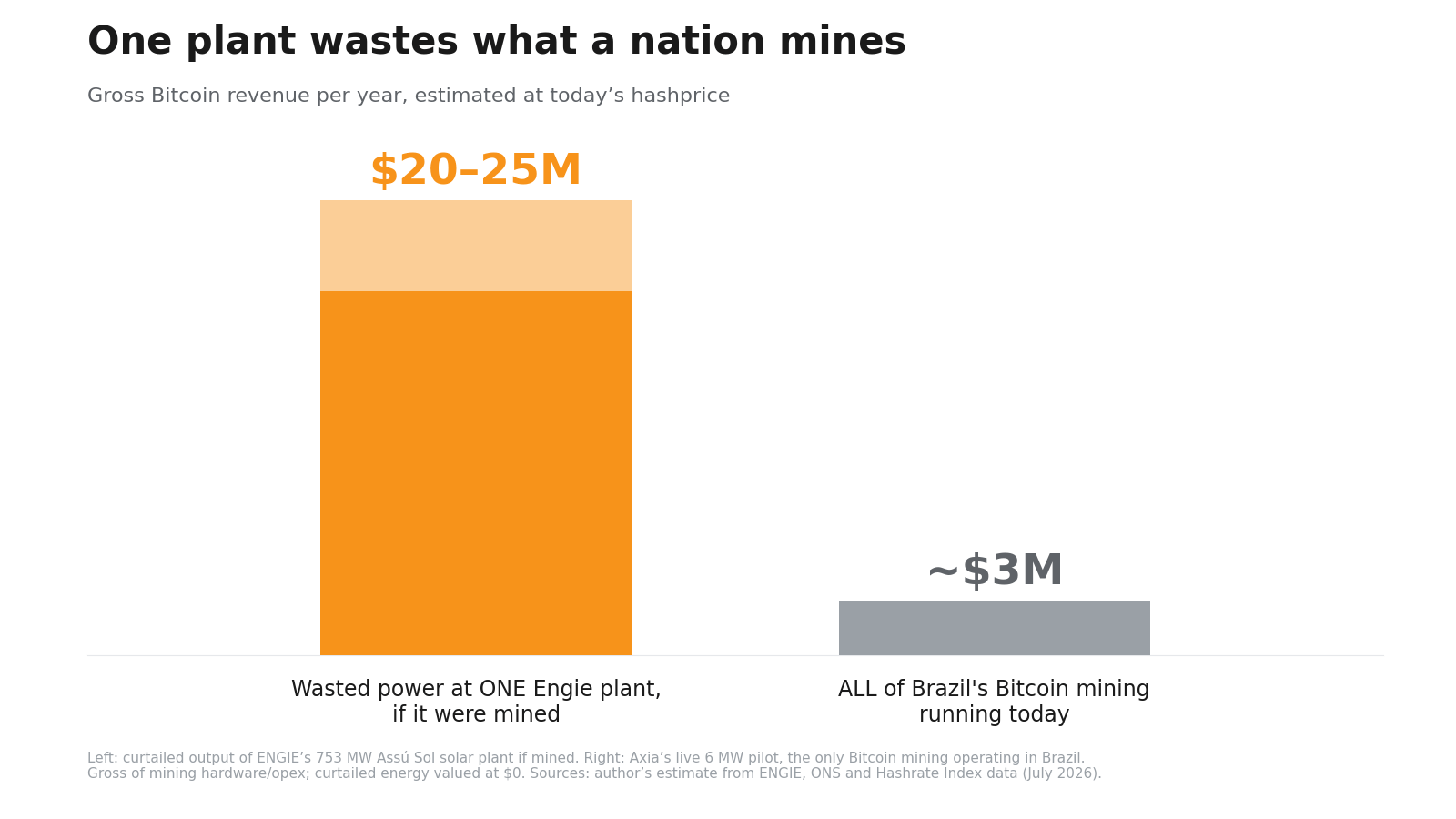
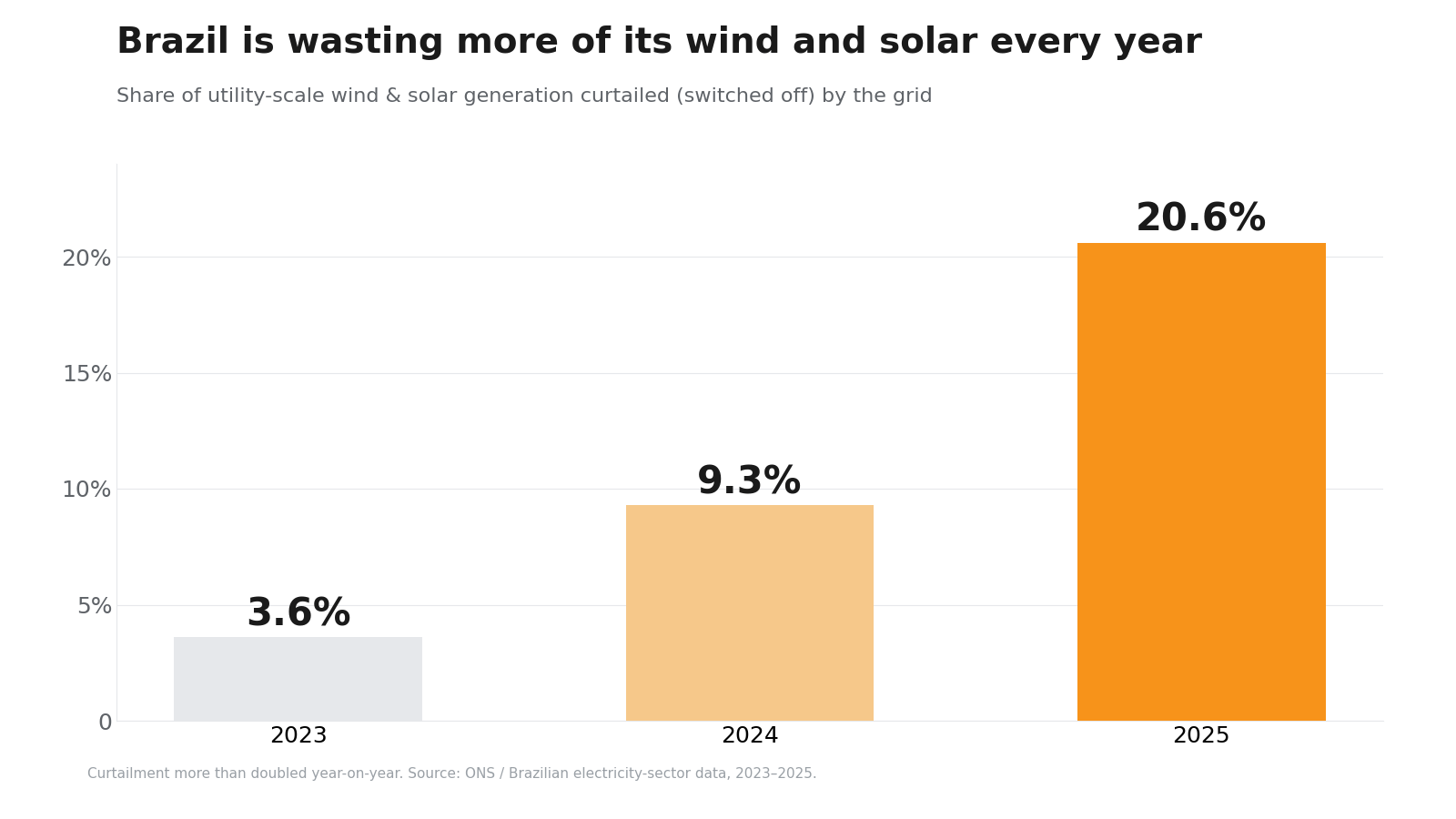
The country now wastes 20.6% of its wind and solar. When the sun is high or the wind strong, the plants make more than the grid can carry, and the surplus is curtailed. Take one plant. Engie’s Assú Sol is the largest solar farm in its global fleet: 753 MW, online since February, and already being curtailed. Its country manager says Engie is weighing Bitcoin mining to soak up the waste. Over a year it averages a little over a quarter of its rated power, an estimated 1.8 TWh. Curtail that at the national rate and an estimated 370 GWh is lost. Mine that power at today’s rates, near a multi-year low, and it earns 20 to 25 million dollars a year in gross revenue, on electricity that now earns nothing.
Against that, the mining actually running in Brazil is a rounding error. On the curtailed wind of Axia, its partner Radius Mining runs one 6 MW pilot of 1,064 machines, earning an estimated 3 million dollars a year. One Engie plant is worth 20 to 25 million; the country’s live mining captures 3.
This is bigger than one company, and further along than an experiment. A cluster of Brazil’s biggest power producers, one of them already mining, are converging on the same move in the same year, in a pattern I have not found anywhere else in the world.
Subscribe to read why those who run the grid are now making Bitcoin’s case for it.
