
Dear Subscriber,
While I was at the (amazing) Free Energy Summit in Lisbon last month, I had the chance to finally ask Kenji Tateiwa some questions I’d always wanted to know the answers to.
For context: Kenji was no less than the nuclear safety engineer who expertly coordinated the American and Japanese nuclear engineers’ response teams after the Fukushima meltdown. But it wasn’t nuclear energy I wanted to know about this time, it was how he convinced the world's 5th largest utility to create a Bitcoin mining subsidiary (something that’s never happened before at this scale), why 300 of India’s top IIT graduates applied for 6 positions at his Bitcoin mining subsidiary, and what he did differently to almost everyone else in Bitcoin who tries to orange-pill people.
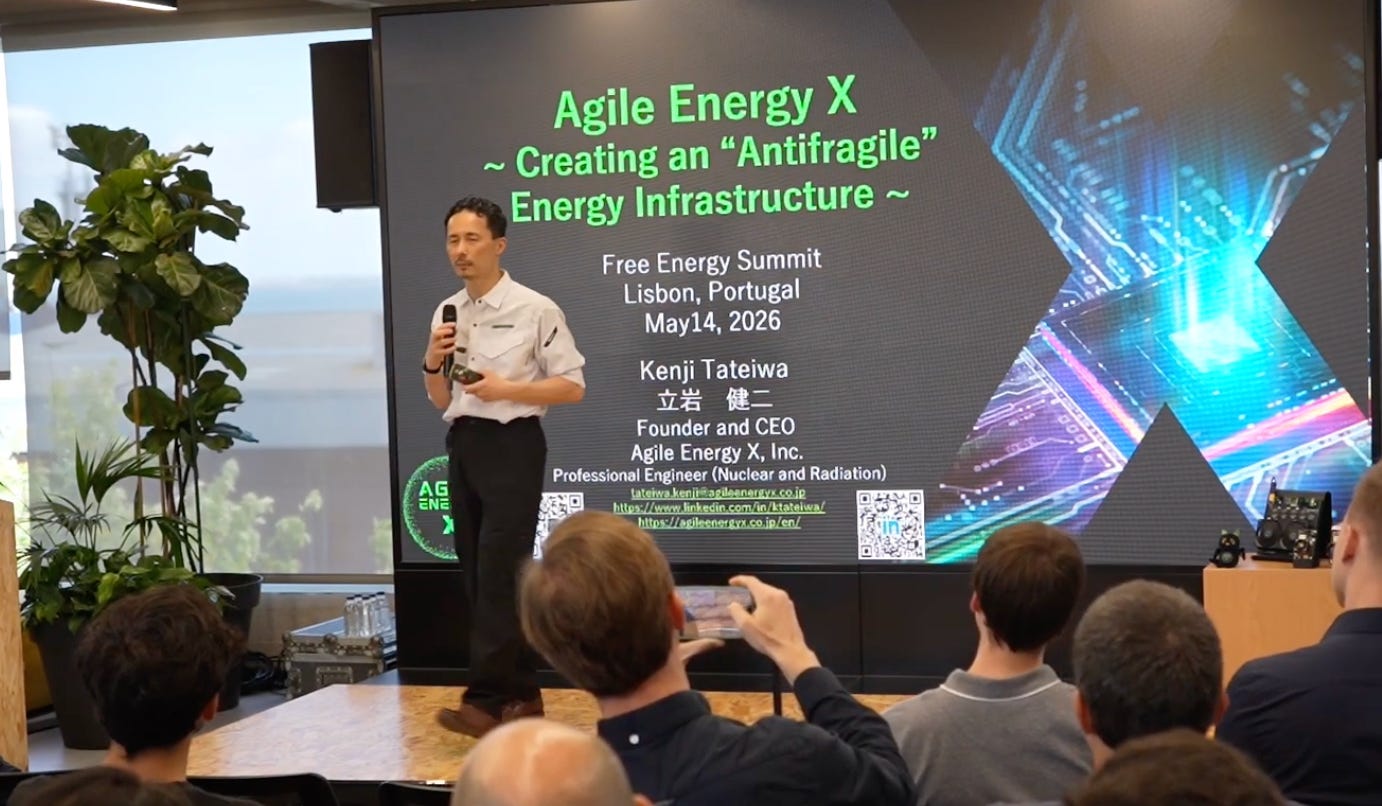
During our 20-min trip to the venue, we shared the back seat of a taxi together, and that 20 minutes changed my opinion on Bitcoin adoption.
Kenji related a story to me he didn’t tell in the presentation. Several years ago he’d brought a Bitcoin mining ASIC to the senior management of TEPCO, where he worked - Japan’s largest utility and the world’s 5th largest utility.
He sat it on the desk in front of TEPCO’s executive management team. And he walked them through why this device was the most flexible load resource in the world, how it could consume electricity and stop consuming electricity in under a second, how it solved the exact grid stability problem they’d been trying to solve for years.
By the end of the conversation, the executives told him: “Kenji, you’re a genius. This is indeed the most flexible load resource that exists.”
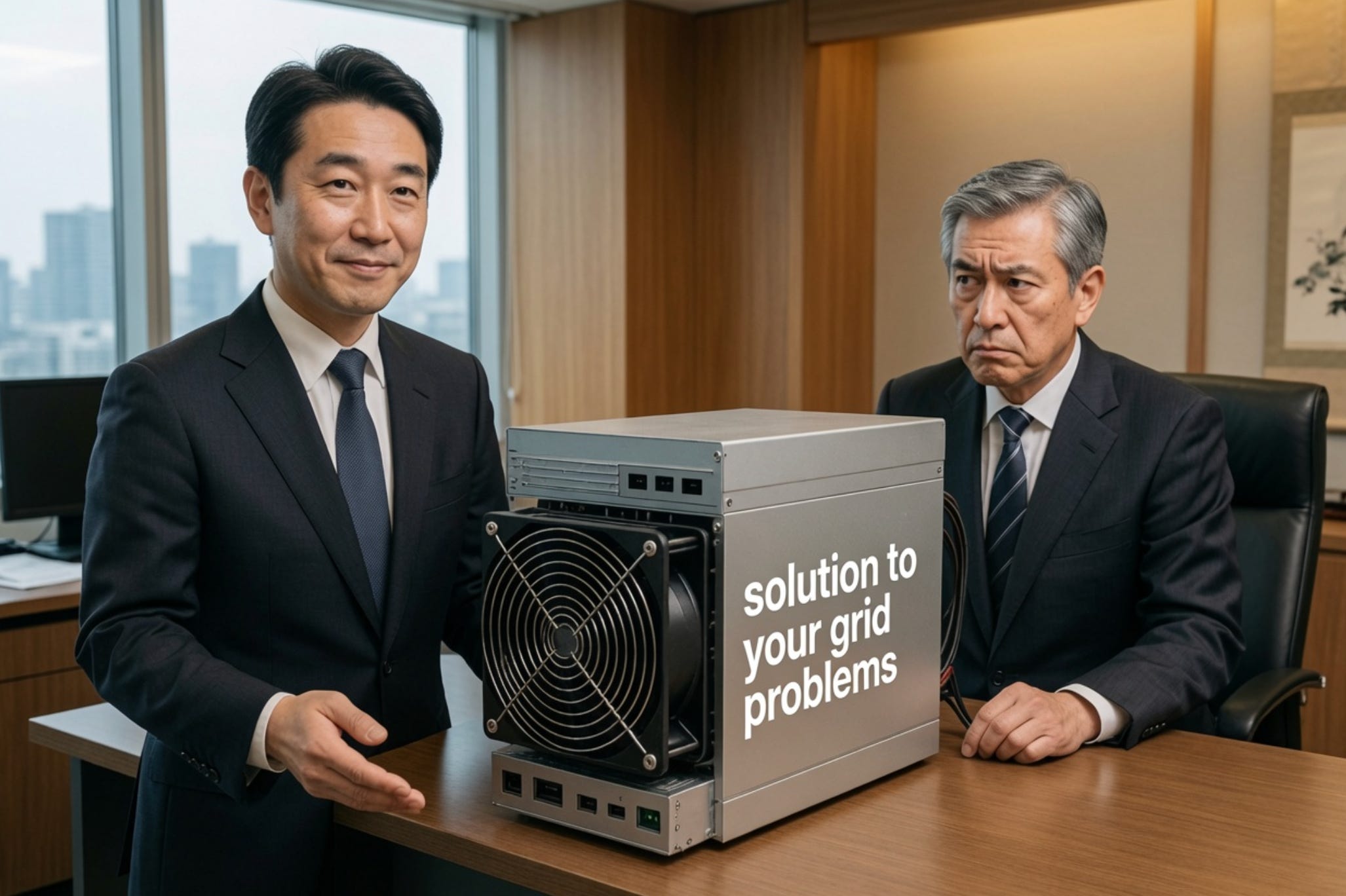
And then they did nothing!
This story is not about Bitcoin mining, it is about psychology and human behavior. Nor is it the first time in history the truth has not been enough
In Vincenzo Viviani’s 1654 biography (Racconto istorico della vita di Galileo), written after Galileo’s death, Viviani described Galileo climbing the Tower of Pisa around 1589 and dropping two balls of different masses in front of assembled professors and students of the University of Pisa. Both hit the ground at essentially the same time, disproving Aristotle’s claim that heavier objects fall proportionally faster.
According to Viviani, the professors watched, were impressed, and then went right back to teaching Aristotle. The professors couldn’t deny what they saw, but the institutional commitment to Aristotelian physics was so deep that the demonstration changed nothing in the curriculum.
To affect change: truth is necessary, but not sufficient. Even when the right people understand the facts, even when they can see the solution sitting on their desk - it doesn’t mean they’ll act. Indeed it is naïve for us to expect this.
Large organisations such as universities and utilities don’t acts like Bitcoiners or startups. They tend to function more like a series of fiefdoms, each of which care about something different. If any one of them says no, it’s a no. You don’t need to convince one person, you need five out of five. So truth by itself isn’t enough. You need truth plus patience plus the willingness to reframe the same truth five different ways.
That’s exactly what Kenji did.
Until now, Kenji’s story has been virtually unknown outside Japan. Yet it is one of the most blueprintable stories in Bitcoin mining about how Bitcoin wins - not by the protocol being anti-fragile (it already is), but by Bitcoiners themselves becoming anti-fragile. Kenji is the clearest case study I’ve seen of what that looks like in practice.
From Fukushima to anti-fragility
Kenji’s day job in 2011 was nuclear safety. When the Fukushima accident happened, he went into the site three weeks after the meltdown. There’s even a hazy photograph of him standing in front of the crippled Unit 3 reactor (that’s him on the far left).

As a nuclear safety engineer, his question afterwards was simple: how do you prevent something like this from recurring? The honest answer is that you can’t predict black swan events. But you can design systems that get stronger when they come. Nassim Taleb called this anti-fragility, and it gave Kenji the concept that would redirect his career.
He started applying that lens to Japan’s energy infrastructure. And the picture wasn’t encouraging. Japan’s energy self-sufficiency ratio is 15%. The country is almost entirely dependent on imported fossil fuel. After Fukushima, the government pushed hard into solar, which created a different problem: curtailment. Too much solar during the day, not enough demand to absorb it. Curtailment started in 2018 and has been growing every year since.
At the same time in 2018, the Bitcoin bubble burst. Japanese media was calling Bitcoin a Ponzi scheme and saying mining was an environmental disaster. Kenji’s first instinct was to stay away.
It’s worth pausing on what Kenji was not. He was not a Bitcoiner. He had no ideological attachment to Bitcoin, no position to defend. He was a nuclear safety engineer who came to Bitcoin because it solved an energy problem he’d observed firsthand. Critics often assume the opposite - that Bitcoin miners work backwards from a conclusion, defending a technology they were already committed to. Kenji’s path ran the other direction entirely.
Then he had the thought that changed everything. Japan is wasting renewable energy. This Bitcoin mining machine is a power guzzler. What if the “power guzzler” consumed the wasted energy?
The dinosaur and the ASIC
He proposed the idea to TEPCO management through an internal innovation programme. Nobody understood what he was saying. Everyone thought he was crazy. They politely suggested he go back to his nuclear day job
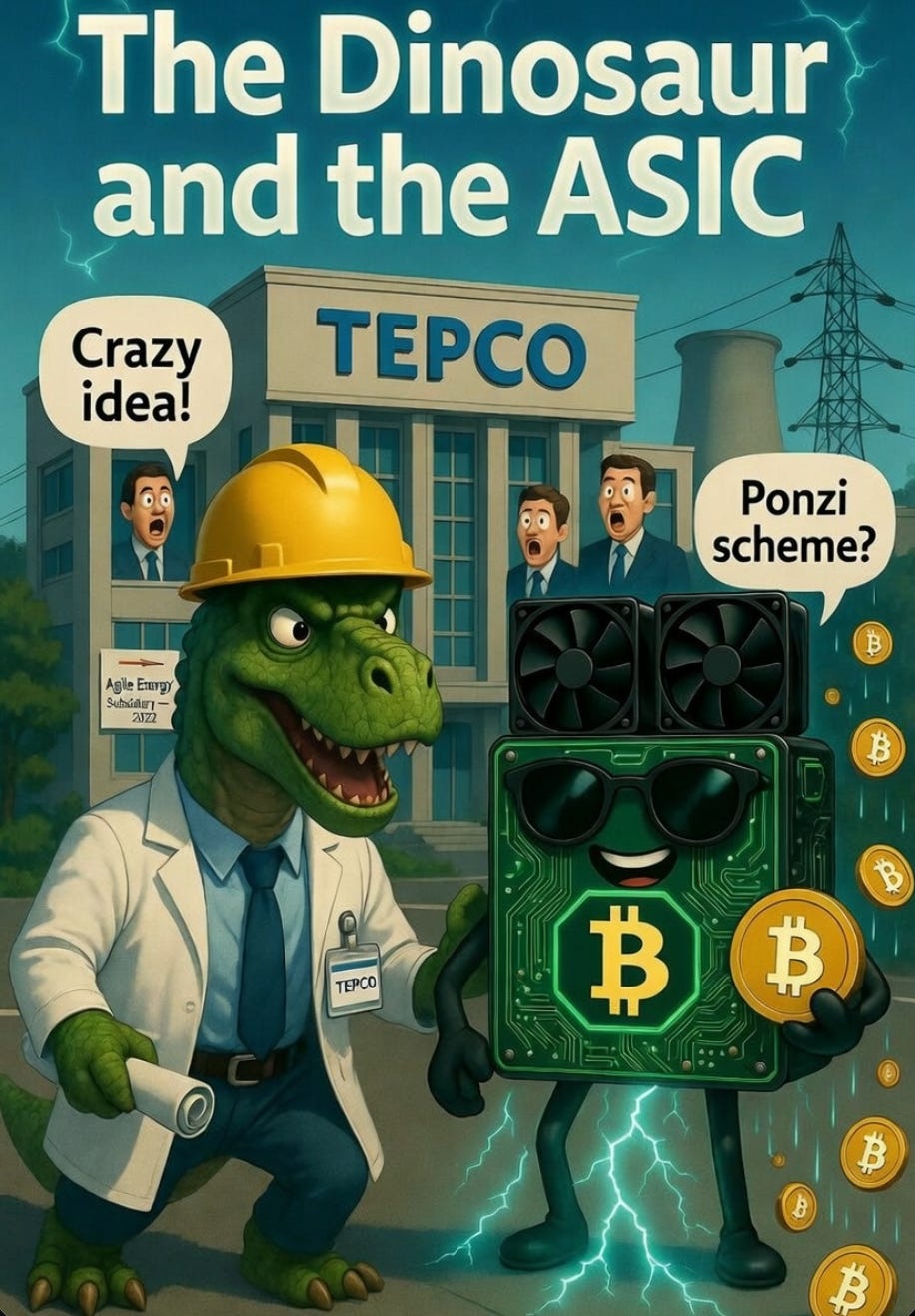
He said thank you very much … and pushed the idea for two more years.
In 2020, he convinced them to let him transfer from the nuclear division to TEPCO’s transmission and distribution arm. His full-time job became Bitcoin mining. He started small - a dozen miners in an office where nobody was watching - and gradually demonstrated to the technical management that this wasn’t a Ponzi scheme. It was a device that converts electricity into digital money, while solving critical grid problems.
By 2022 he had a 1.5-megawatt facility running 300 Bitcoin miners, within TEPCO. For the first time in the history of a Japanese utility, there was Bitcoin on the balance sheet. The corporate headquarters told him they didn’t want Bitcoin on the balance sheet. He told them it was perfectly legal.
Then came the question that would have stopped most people. The management asked: how certain are you that Bitcoin mining solves the grid issue? Kenji said “pretty certain”. They replied “Pretty certain is not enough. How many nines after 99.99%?”
His answer was to propose setting up a separate subsidiary - because inside the big TEPCO organisation, there were too many constraints. In August 2022, TEPCO allowed him to create Agile Energy X, a wholly-owned subsidiary using Bitcoin mining as one of its core solutions.
The largest utility in Japan, the company that operated Fukushima, created a Bitcoin mining subsidiary. Because one engineer wouldn’t stop.
Diamonds from thin air
What Kenji built next is where the story gets genuinely strange.
He calls it the “ultimate circular economy.” It starts with stranded renewable energy that can’t connect to the grid because of congestion. Bitcoin miners consume that energy. But instead of venting the waste heat, it gets piped into greenhouses running aquaponics - a circular agriculture system where fish waste feeds vegetables, the vegetables purify the water, and insect larvae decompose food waste into fish food. The whole system loops.
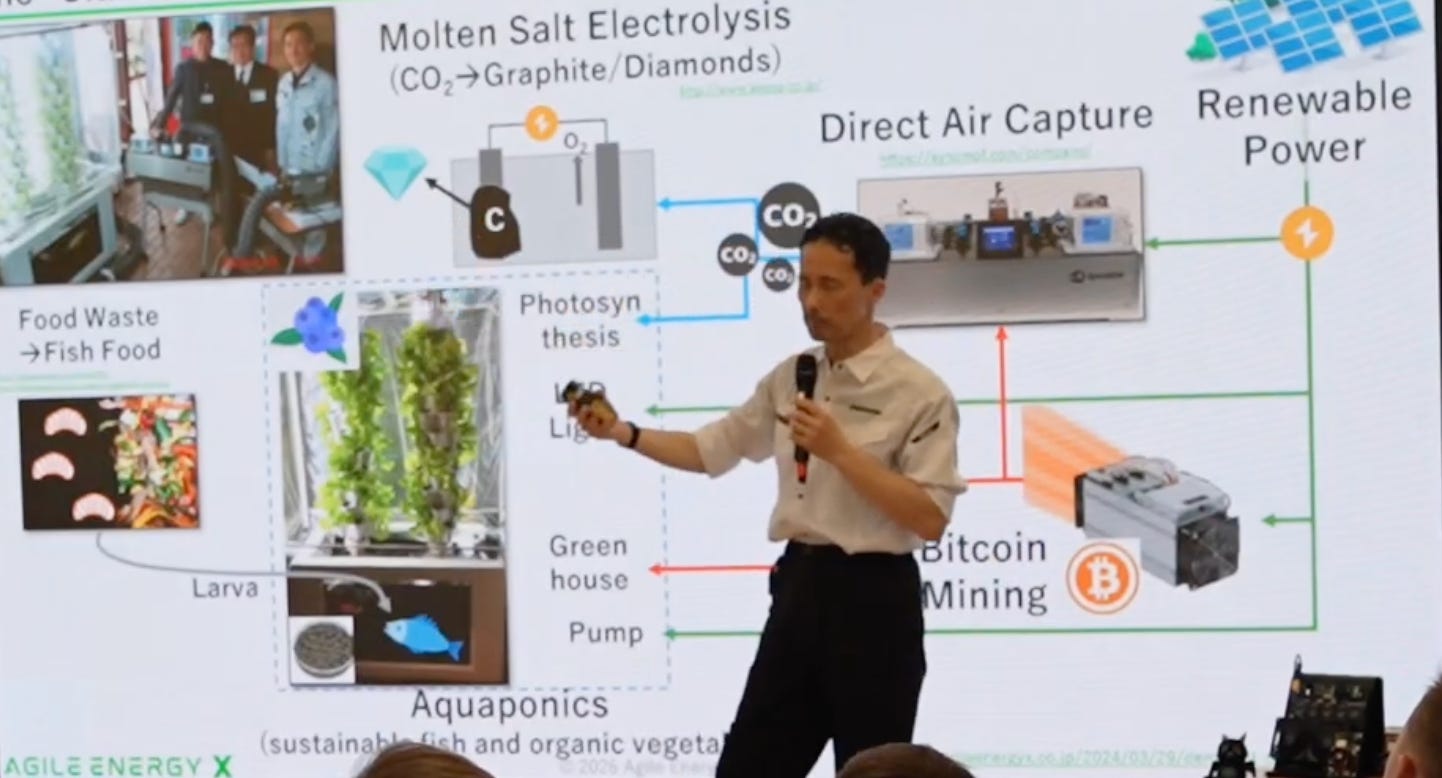
Then there’s a second use for the waste heat: powering direct air capture to pull CO2 from the atmosphere. Most direct air capture projects bury the carbon underground. Kenji doesn’t bury it. He dissolves the CO2 in molten salt and electrolyses it. The output is oxygen gas and solid carbon.
And here is where I had to check his sources. Under certain electrode conditions, the solid carbon forms as micro-diamonds. Published in a peer-reviewed paper from Kyoto University. Kenji’s own specialty, when he was at Kyoto, was molten salt electrolysis. He didn’t know you could make diamonds from it until he read his former colleague’s paper.
So the chain runs: wasted renewable energy → Bitcoin → waste heat → food production + captured CO2 → diamonds. From energy nobody wanted to a gemstone.
This may sound like science fiction, but the Japanese government’s own R&D organisation has written that Bitcoin mining is an effective tool to solve grid congestion. The proof-of-concept facilities exist. One is in a town hall in Saitama Prefecture where the mayor liked the concept so much he invited Kenji to build it.
Another is being developed in Toyotomi, a town in Hokkaido with stranded natural gas and an aging population, where the mayor sees Bitcoin mining as a way to bring young people back.
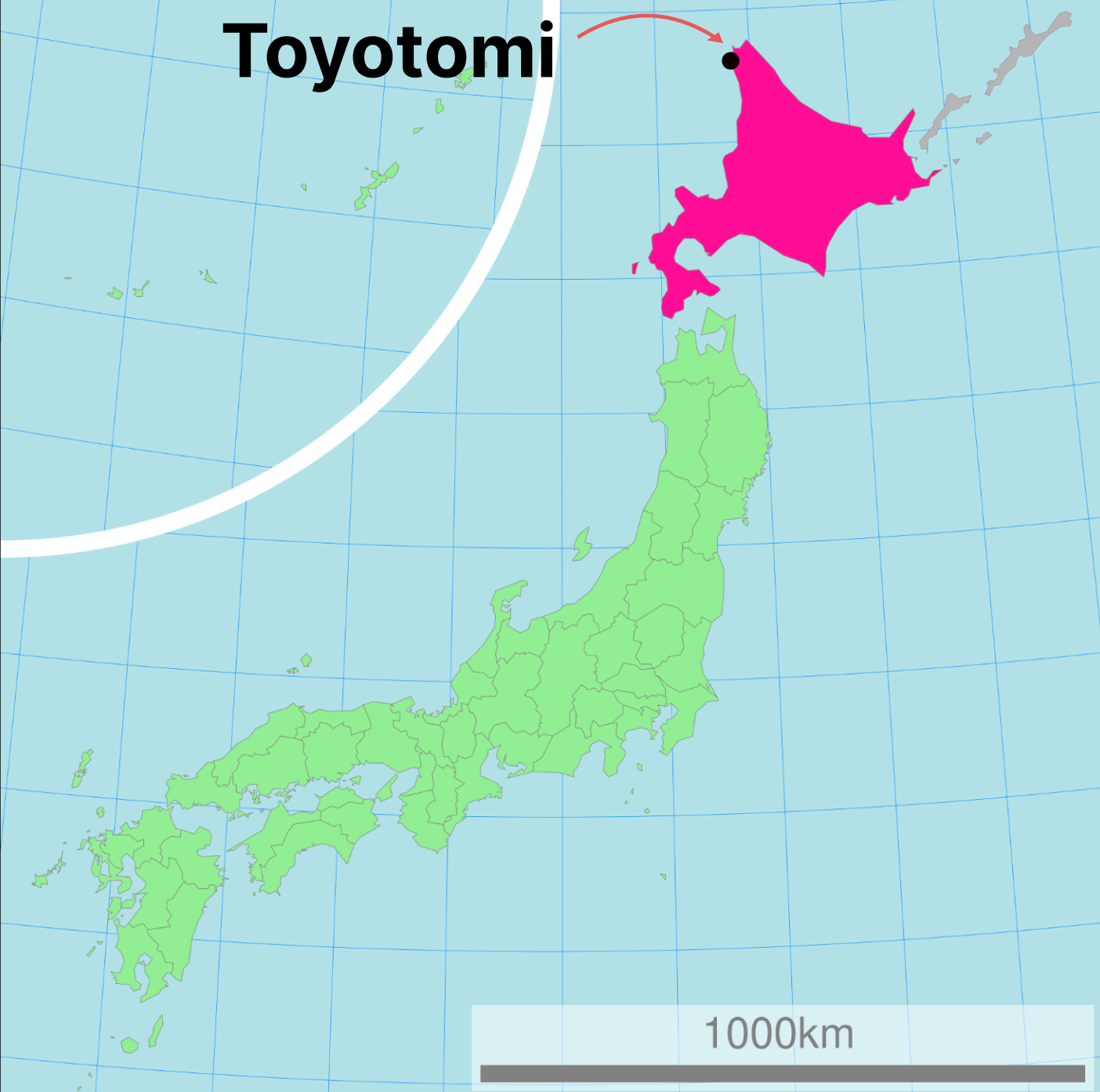
Kenji told me that the gas was previously venting into the air, so Bitcoin mining is also preventing a greenhouse gas (methane) which is 84x times more warming than CO2 over a 20-year period from entering our atmosphere.
Then there’s the eel farm.
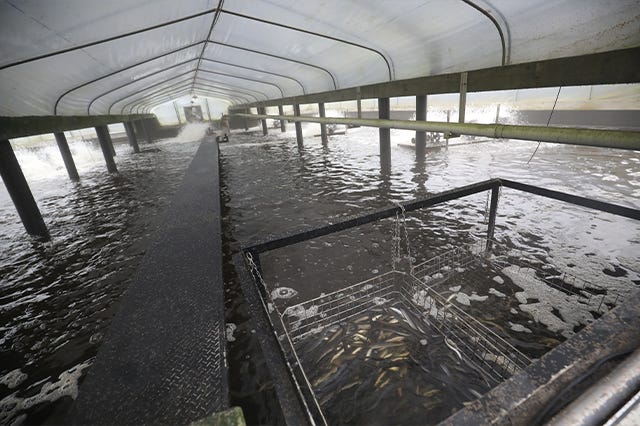
In Hokkaido, an eel farmer was burning kerosene to heat his pools. Kenji suggested replacing the kerosene boilers with Bitcoin miners. The primary output is heat for the eels. The secondary output is a small amount of Bitcoin. The farmer is spending less on fuel and earning Bitcoin as a byproduct of keeping his eels warm.
Here’s what we can all learn
300 students from the Indian Institute of Technology (IIT) applied for six summer internship positions at Agile Energy X last year. Yes, 300 elite graduates wanting to work for a Bitcoin mining company. This year they already have 250 applications. Why? The answer is, the students aren’t attracted by Bitcoin mining alone. They’re attracted by the unique integration of solutions that only Bitcoin mining enables: energy, agriculture, carbon capture, community development - with Bitcoin mining as the connecting thread.
That’s anti-fragility in practice: not one fragile revenue stream but a system where each component strengthens the others. Where a shock to any one part - a Bitcoin price drop, a regulatory change, a shift in energy markets - doesn’t collapse the whole. Where the system gets stronger under stress because it was designed to.
Which brings me back to that taxi ride.
Kenji stood in front of a crippled nuclear reactor in 2011 and asked how to make a system that doesn’t break. Fourteen years later, he’s built a company that turns waste into food, CO2 into diamonds, and methane pollution into Bitcoin.
The executives who told him he was a genius and then did nothing - they eventually did something. Not because the truth changed. Because Kenji didn’t stop.
The take-out for us all:
The first rule of Bitcoin is don’t lead with Bitcoin
Bitcoin solves a monetary problem most people can’t see, but an energy problem that can’t be hidden.
When a critical mass of Bitcoiners become as antifragile as Bitcoin itself, Bitcoin will have won.
In the Bhagavad Gita, Krishna tells Arjuna: “You have a right to perform your actions, but you are not entitled to the fruits of your actions.” Kenji proposed Bitcoin mining to TEPCO management and was told to go back to his day job. He proposed it again. And again. For two years. Not because he was guaranteed a result, but because the action was right. The fruit came later.
A fascinating example of how persistence, not just having the right idea, is often what turns innovation into reality
What a fascinating and uplifting story, well told and with so many learning points drawn out of it. 'Truth is necessary but not sufficient' — that really struck me, and how patience and persistence are necessary to create change.